Compare seven handmade and small-batch fixed-blade knives from Bark River, Noblie, Helle and more. Explore steels, grinds and the right knife for your trip.
A fixed blade earns its place in a hiking pack when the trip involves more than opening snack bags. Carving tent stakes, preparing a camp meal or dressing game calls for a knife with a comfortable handle, useful cutting geometry and a sheath that works with the rest of your gear.
Bark River, Noblie Custom Knives, Helle and L.T. Wright offer very different takes on that tool. Handmade custom knives at this level range from plain working models to individually finished hunting blades and more elaborate collector pieces.
The seven selections below cover handmade knives and models produced in small batches with hand finishing. Recommendations are based on the makers’ published specifications and how each design suits a particular job. The intended use matters more than the position in the list.
What Makes a Good Fixed-Blade Trail Knife?
For mixed hiking and camp tasks, a blade around 3 to 4.5 inches is a useful starting point. A compact skinner can make sense on a hunting trip, while a longer blade gives you more cutting edge for food and wood. Check the sharpened edge length as well as the total blade length, since a large finger choil can account for a surprising part of the difference.
Thickness alone tells you little about cutting performance. The grind, thickness immediately behind the edge and sharpening angle determine how readily a blade enters material. A substantial spine can support demanding woodwork, but a thick wedge near the edge makes slicing harder. None of these knives should be treated as a pry bar.
Handle fit deserves equal attention. A palm swell that feels comfortable for a brief hold may press against your hand during repeated carving cuts. Sheath position matters, too: a belt knife and a backpack hip belt can compete for the same space.
1. Bark River Bravo 1
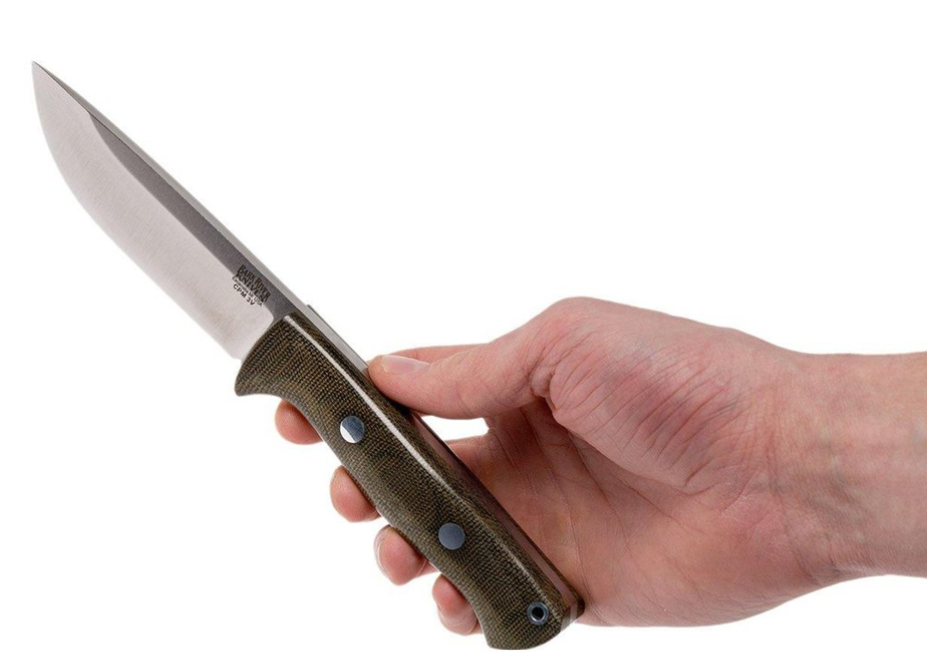
The standard Bravo 1 is a substantial knife for its length. Bark River lists the CPM 3V version with a 4.25-inch blade, approximately 5.5 mm of stock and a weight of about 7.4 ounces before the sheath. Its convex geometry and contoured handle suit trips involving repeated camp chores and wood preparation.
CPM 3V is valued for toughness, which is useful when the edge encounters demanding cuts. It still needs cleaning and drying after use. Other Bravo 1 runs use different steels. The thinner Bravo 1 LT also shares the name, so check which version you are buying.
The practical question is whether your trip warrants this much knife. For sustained woodwork, the substantial build can be useful. For a long hike with a stove and prepared meals, its weight and thickness may buy capability you rarely use. A loaded strop can refresh a lightly dulled edge. Chips or substantial wear call for a stone or plate.
2. Noblie Knife for Skinning Deer
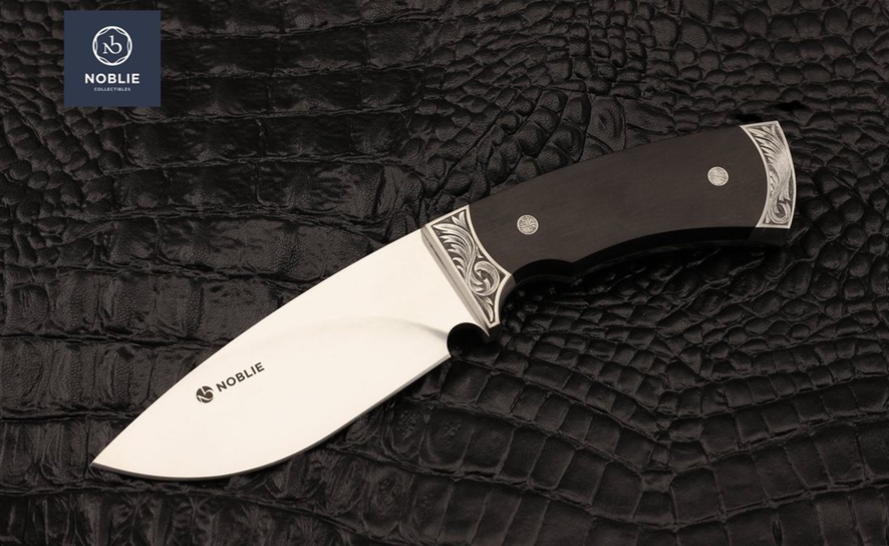
Noblie’s Knife for Skinning Deer combines a compact working blade with decorative metalwork. The blade measures 3.15 inches (80 mm), with 5 mm stock and Böhler N695 stainless steel at a stated 57 HRC. Overall length is 7 inches (178 mm).
The short blade and curved cutting edge suit controlled skinning cuts. An ebony handle and titanium bolster give the knife its character, with vine leaves engraved on both sides of the bolster. Noblie lists it as a one-of-a-kind piece, supplied with a black leather sheath and certificate of authenticity.
The hand engraving gives a hunter who also collects knives a reason to consider this particular piece. N695 can be maintained with a suitable pocket stone, and the stainless blade is useful on damp trips.
The 5 mm stock is substantial for such a short blade. Treat this as a hunting specialist: it offers less reach for long slicing cuts and less room for wood processing than the larger knives here.
3. Helle Temagami
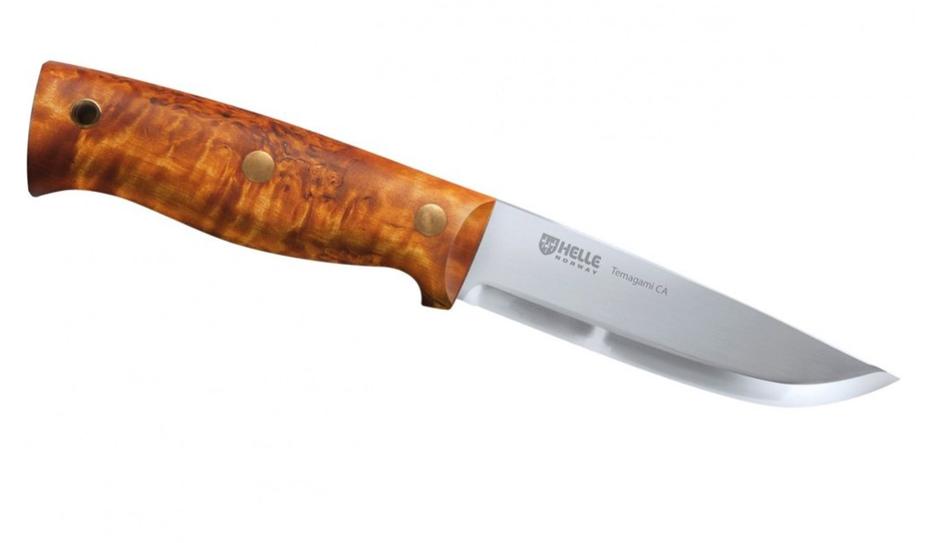
Designed with Les Stroud and made in Norway, the Temagami combines a curly birch handle with a 4.33-inch (110 mm) blade. The current 14C28N version uses 3 mm stainless stock and weighs about 7.6 ounces including its leather sheath.
The handle is a significant part of the design. Its tang runs the full handle length but occupies roughly three-quarters of its width, leaving wood along the underside where your fingers wrap around it. The Scandinavian grind suits controlled carving and making feathersticks, while the stainless steel makes routine care manageable.
Make sure you are comparing the right generation. Older Temagami knives used laminated steel. The current 14C28N version uses a single steel and has a sharpened spine suitable for a ferro rod.
The Temagami is well suited to hikers who enjoy carving and traditional camp skills. Give the birch handle and leather sheath time to dry after wet weather, just as you would the blade.
4. L.T. Wright GNS Saber
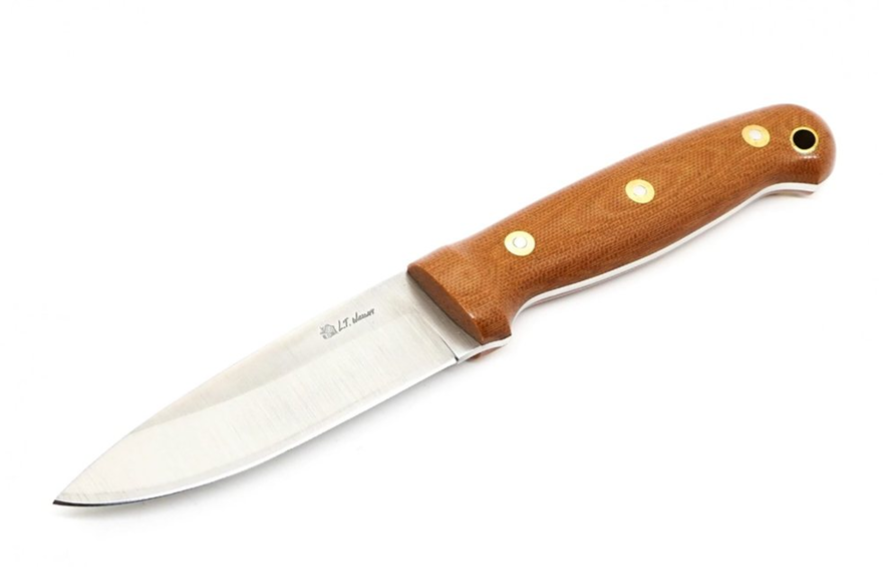
The GNS Saber has a 4.25-inch sharpened edge, approximately 1/8-inch blade stock and a contoured Micarta handle. The maker’s current specification names O1 tool steel, a full tang and a saber grind with a secondary convex edge.
When sharpening, remember that the main bevel and the cutting edge are different surfaces. Laying the entire saber bevel on a stone does not reproduce the factory edge. Learn to maintain the smaller convex edge before taking it away for several days.
Micarta is a practical handle choice for repeated use and regular cleaning. The GNS also has a sharpened spine and a large lanyard hole. O1 requires more attention around water than stainless steel. Wipe it clean after food preparation, dry it before sheathing and use an appropriate protective oil when needed. A patina can develop with use, while active rust should be removed.
5. Fiddleback Forge Bushfinger
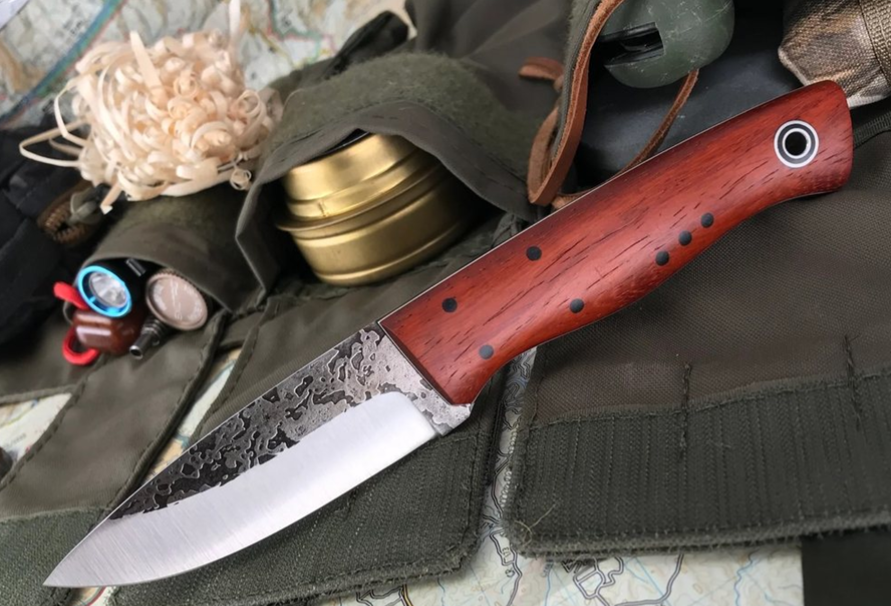
Andy Roy’s Bushfinger has a 4-inch blade and measures 8.5 inches overall. Fiddleback Forge’s model specification lists A2 tool steel, a convex grind and either a skeletonized full tang or tapered tang, depending on the individual knife.
The attraction is the hand-shaped handle. Its contours and palm swell are worth examining closely if your camp routine involves prolonged carving. Wood and synthetic handle combinations vary between individual examples, as do details such as tang configuration.
Compare the handle dimensions with a knife you already find comfortable. Photographs can show the profile and finish, but they cannot tell you where your fingers will land.
Also budget for a sheath, since Fiddleback lists it separately. A2 needs protection from moisture, and selecting a sheath that fits both the knife and your preferred carry position is part of putting the kit together.
6. Bradford Guardian 4
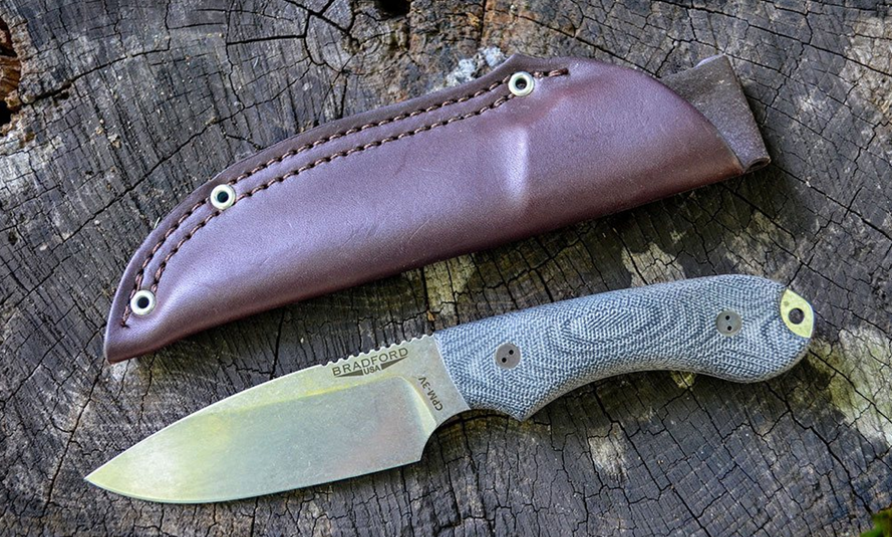
Bradford hand-finishes its knives in Kent, Washington. The Guardian 4 in M390 offers a useful combination for general camp cutting: a stainless blade, synthetic handle options and a choice of full-height flat or saber grind.
Bradford lists a 4.125-inch (105 mm) cutting edge and a 4.625-inch total blade length. That distinction is useful when comparing it with knives that carry their edge closer to the handle. A leather sheath is supplied, with Kydex options available separately.
M390 offers good corrosion resistance and wear resistance for repeated slicing. A compact diamond sharpener is a practical match for field maintenance, and edge life depends on what you cut and how the edge is ground.
For food, cordage and occasional carving, the full-height flat version is the more relevant starting point. Check the exact model before ordering, since the Guardian family includes several similarly named sizes.
7. Casström No.10 Swedish Forest Knife
The No.10 Swedish Forest Knife is offered in configurations that serve different purposes. For a hiking trip with regular meal preparation, the full-flat-ground 14C28N version is the one to examine first.
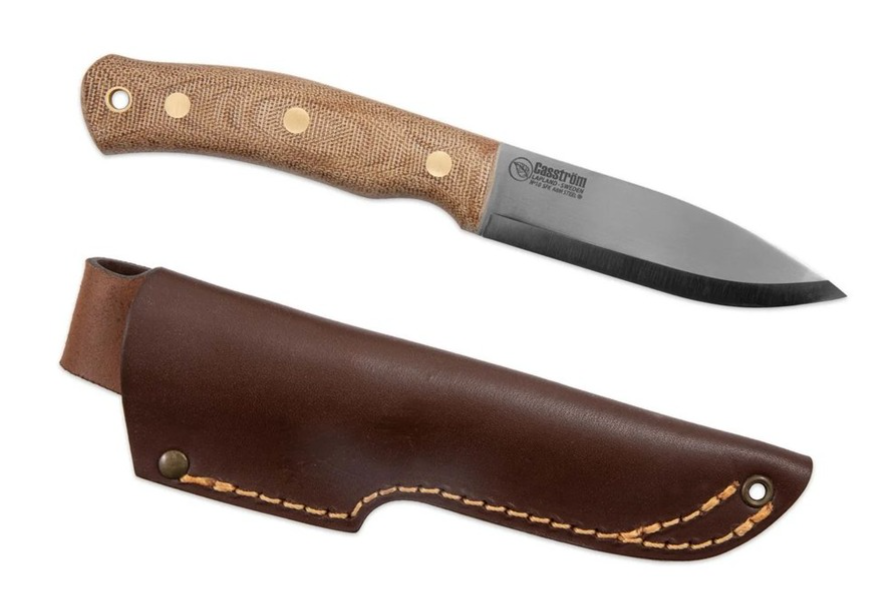
Its stainless blade measures approximately 4.06 inches (103 mm), with 4 mm stock. Handle choices include stabilized curly birch, orange G10 and black Micarta. A leather sheath is included. The orange handle is a useful option if you tend to set tools down among leaves or camp gear.
The full flat grind gives the blade a gradual taper from the spine toward the edge, which suits slicing as well as ordinary camp tasks. Casström also offers Scandi-ground No.10 knives in Sleipner, so check the steel and grind together when comparing listings.
Casström develops its knives in Sweden and works with European factories, with final quality work carried out at its Swedish base.
Which Knife Fits Your Trip?
A few details about the itinerary can narrow the choice:
- Woodland camping with plenty of carving: Start with the Helle Temagami or L.T. Wright GNS Saber, then decide whether stainless steel or a Micarta handle is the higher priority.
- Hunting with an interest in engraved knives: The Noblie skinner combines a compact blade with ebony, titanium and individual decorative work.
- Repeated wood preparation at camp: Compare the Bark River Bravo 1 and Fiddleback Forge Bushfinger, paying attention to weight, handle fit and the exact blade thickness.
- Meals, cordage and mixed camp tasks: Look at the Bradford Guardian 4 with a full-height flat grind or the stainless Casström No.10 Flat Grind.
On a long hike with a stove and prepared food, prioritize easy carry and slicing ability. You may never need the extra weight of a heavy camp knife.
Before You Pack It
Check sharpness at home and touch up the edge only if it needs work. Then make a few cuts in clean wood, cord and food to learn how the blade behaves.
Fit the sheath while wearing your loaded backpack. Walk, sit and bend to check for pressure from the hip belt, and confirm that the knife remains secure during normal movement. An uncomfortable carry arrangement tends to stay uncomfortable all day.
Finally, pack a sharpener you know how to use and something to wipe the blade dry. After a wet trip, let the knife and sheath dry separately before storage. Those small habits matter whether you carry a hand-engraved Noblie, a traditional Helle or a Micarta-handled bushcraft knife.